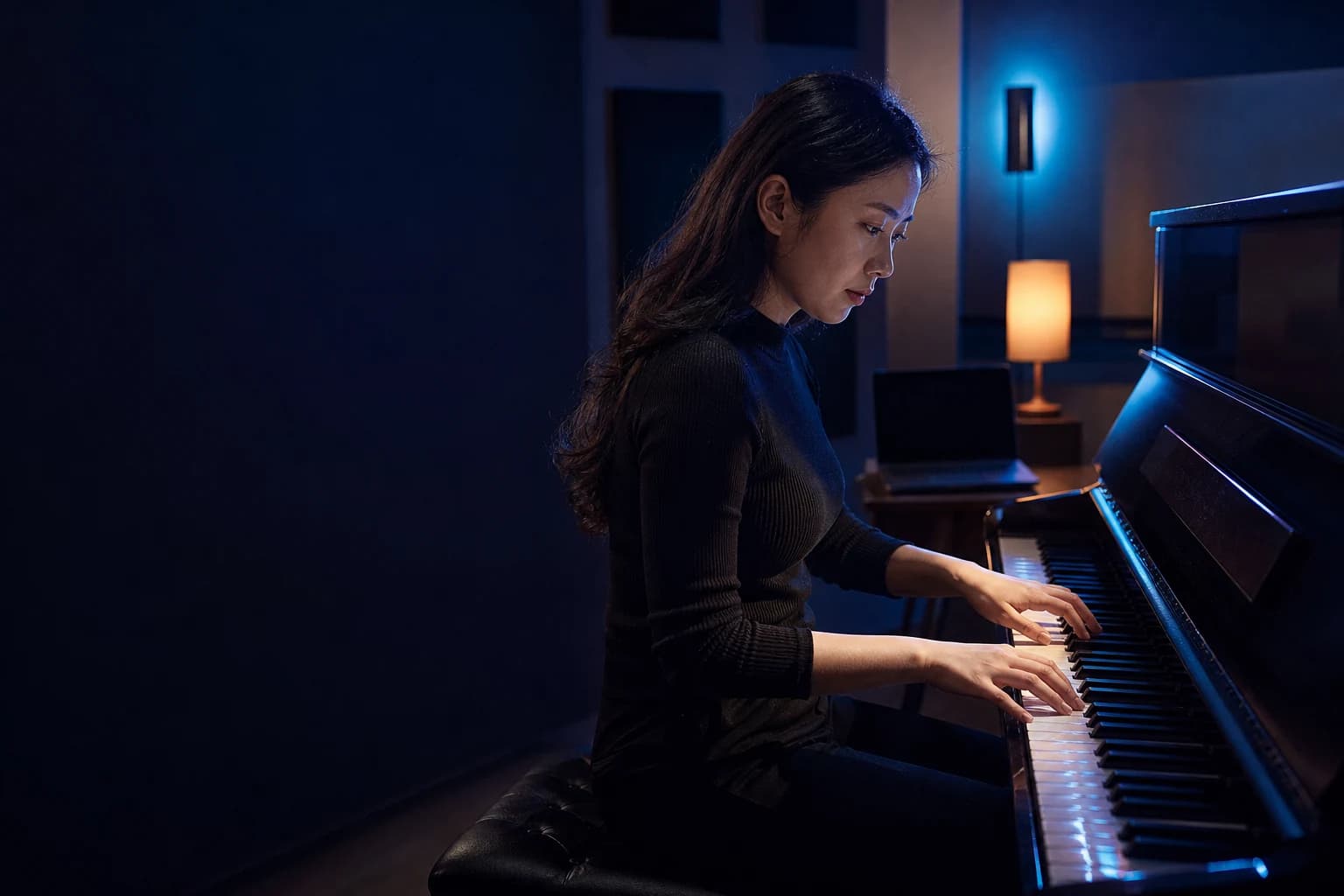
Score-native practice for focused musicians
Practice that knows the score.
Open a real score, hear it in context, loop the hard measures, and save exactly where you left off.
 Authentic Player capture
The catalog
A library built to be played.
Find something worth practicing—from a first study to an impossible étude—then open it directly in the Player.
5,000+
arrangements
6.2 million
notes
Nearly 250
hours of music
Piano · Strings · Guitar · Winds · Brass · Organ · More
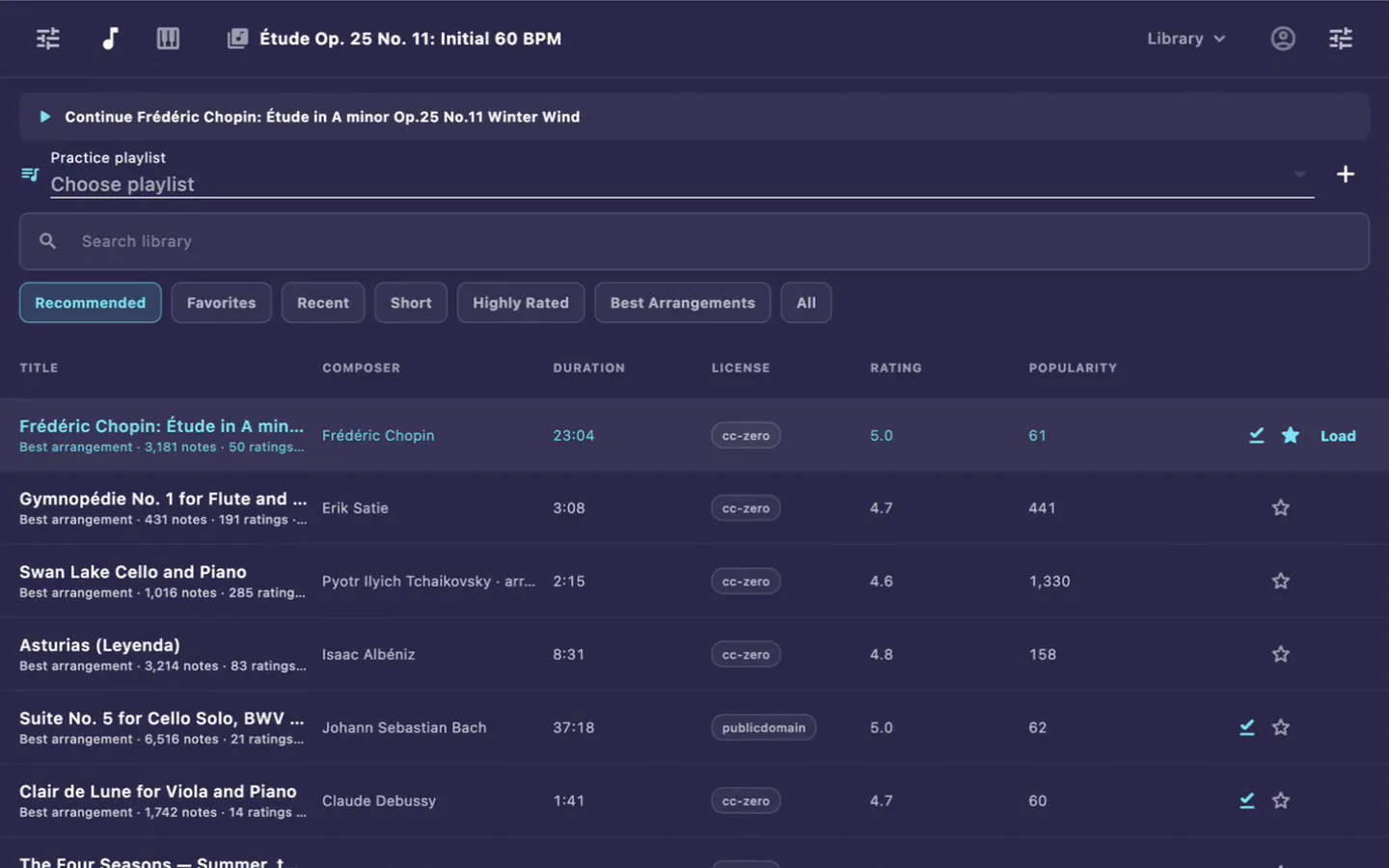
Library → Winter Wind → Player
Authentic local catalog capture
Choose the music. Then make it yours.
Audited from the CC0 and public-domain catalog metadata · July 2026
Practice starts in the score
Hear it. Find it. Work on it.
Rolling Note keeps playback, notation, tempo, and the difficult passage in one musical context. The interface gets out of the way so the work can become specific.
Authentic Player motion
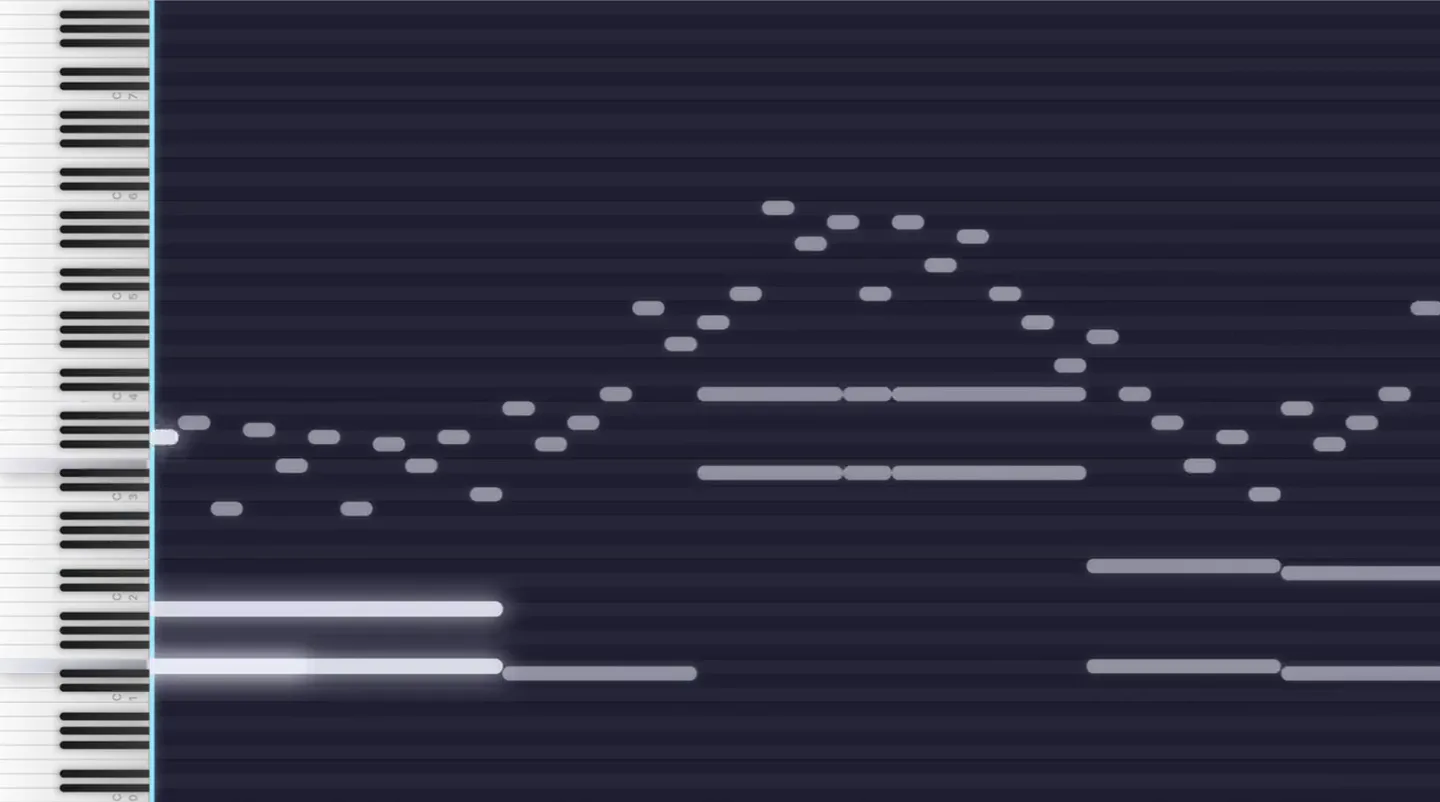
Chopin · Winter Wind · Opening → later in the étude
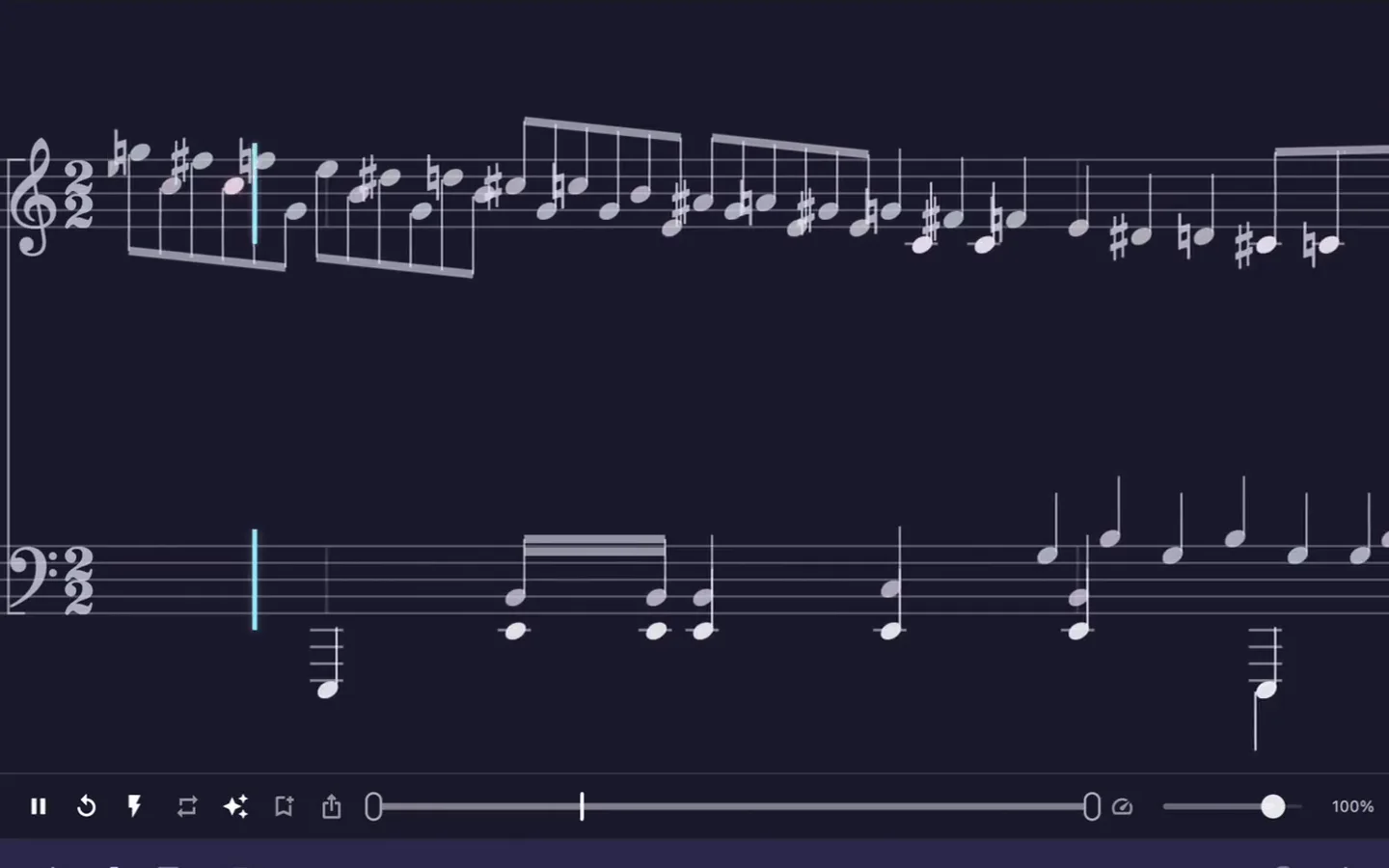
Exact Player output · original playback speed · clean passage cut
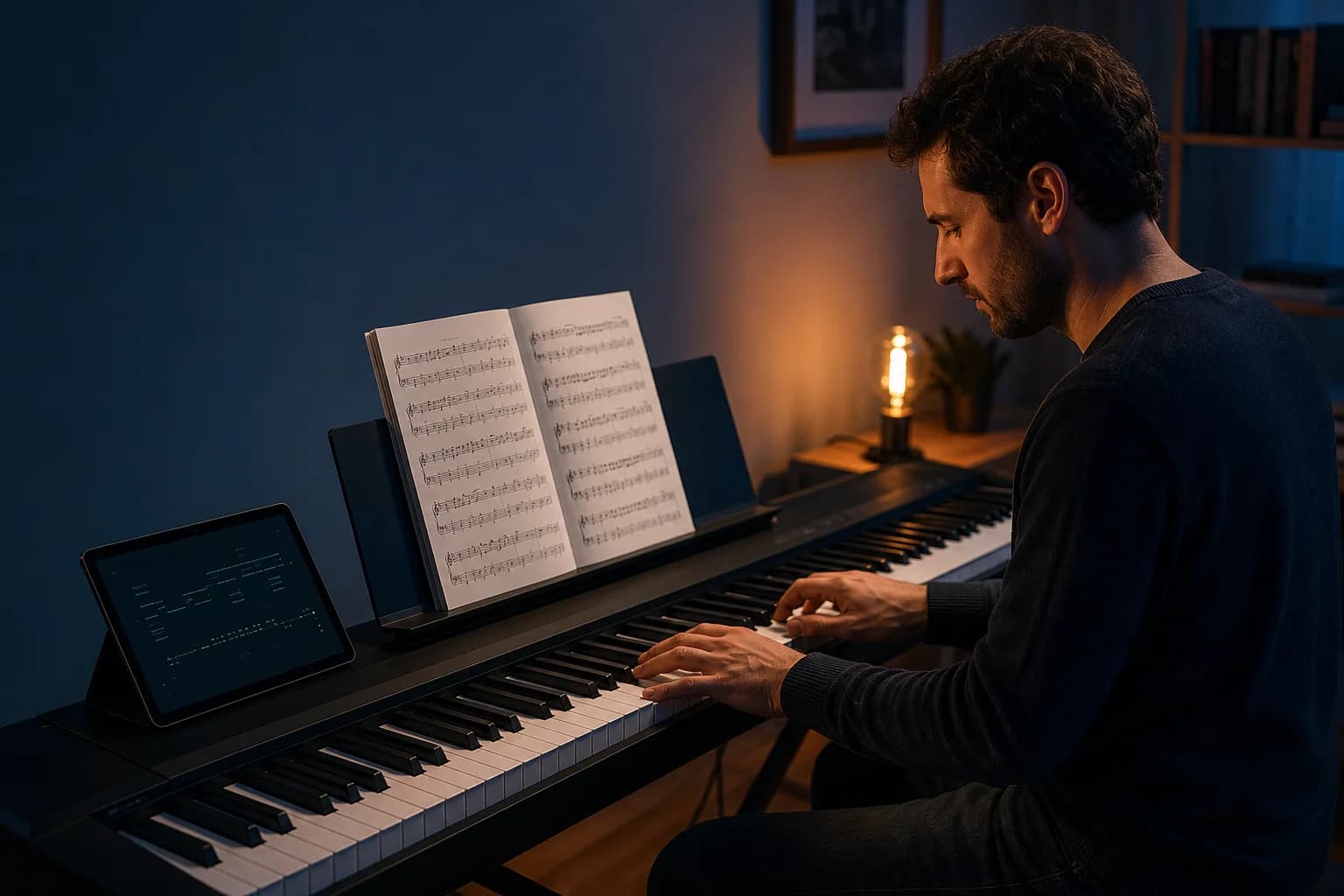
Keyboard · score · Player
The practice context stays visible
Open the whole piece
Begin with the score—not a disconnected exercise or generic dashboard.
Isolate the measures
Loop the passage, adjust the tempo, and keep the musical context visible.
Keep the useful state
Preserve the place and intention that make the next session easier to begin.
The practice loop
Start in the music. Keep what matters.
A useful session has a place, a tempo, and a reason. Rolling Note keeps those pieces close enough for practice to continue.
Select score
Open the piece in the Player and keep the music in view.
Focus passage
Move directly to the measures that need another listen.
Save your place
Keep the score, passage, tempo, and reason close.
Return tomorrow
Begin the next session with the problem already framed.
Practice memory
Tomorrow should not begin from zero.
Today, the Player can keep local recents, saved practice context, and performance summaries close to the music. The account layer is where that value can later become durable across devices, sharing, and review.
Continue practicing
Your recent work
Nocturne Study
mm. 12–16 · 72 BPM
Allegro in A minor
mm. 28–32 · 68 BPM
Etude — left hand
Saved practice target
For teachers
The lesson continues in the Player.
Frame the passage, tempo, view, and intention—then let the student practice it in the same musical context.
Rolling Note Pro is the teacher and studio direction: shared passages, review, assignments, and studio memory around the same Player students use to practice. Paid Pro plans are not live yet.
Explore Rolling Note Pro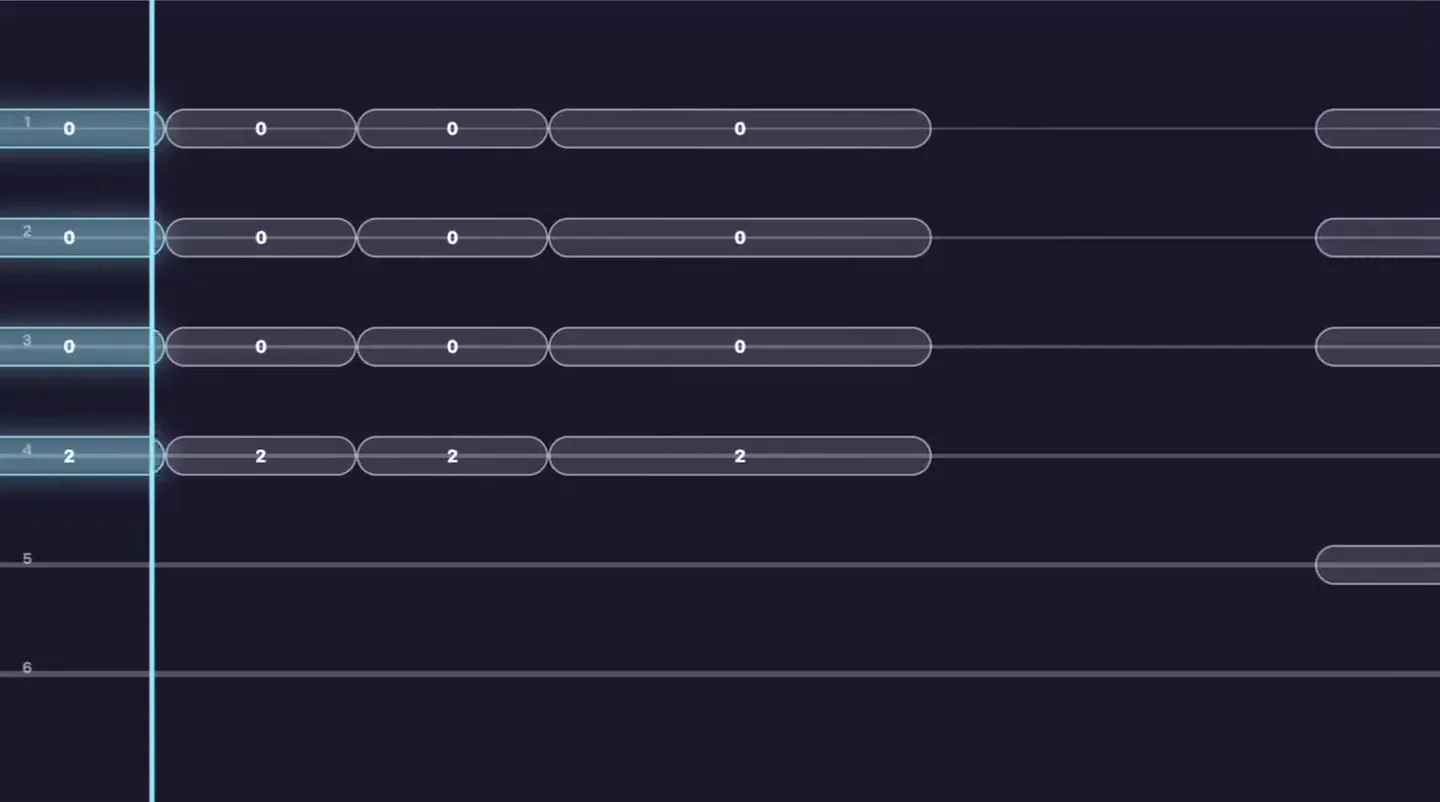
Paganini · measures 15–17 · Guitar Guidance
Authentic Player output
The next session is waiting
Become the player you imagine.
Build the habit around real music, one difficult passage at a time.
Create your practice account